


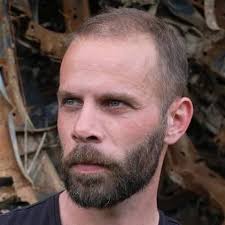
“We’ve never seen so many journalists killed in history,” says Jean Marc Mojon, a war correspondent. Through his firsthand experience in Gaza, he sheds light on the risks of his profession today. At 49, Mister Mojon has traveled to more than ten war zones to keep the world informed.
Journalisme “in a war zone”
“Journalism is about giving people the chance to walk in someone else’s shoes for two minutes,” says Jean-Marc Mojon. He does not describe himself as a “war correspondent.” He calls that label a “limiting term,” preferring the phrase “journalist in a war zone.” Jean-Marc Mojon has been in this profession for 30 years, and has worked at Agence France-Presse (AFP) for 25 of those years. He began his career as a freelancer. During an assignment in Ivory Coast, he found himself caught up in a civil conflict triggered by a coup d’état when he was just 22 years old. Mr. Mojon then realized that he felt “at ease in this kind of environment, able to work effectively” despite the danger and pressure. He specialized in war zone journalism following this event. More recently, he has become responsible for the safety of journalists in difficult environments. This career shift allows him to draw on his experience during intensive training sessions for future reporters. For journalists, there is no typical day: meetings, training sessions, and field assignments vary from one day to the next.
An “obstacle course”
Entering a country in conflict is becoming more difficult, as authorities are increasingly scrutinizing press visas at the borders. Mr. Mojon describes this tightening of restrictions as an “obstacle course” for reporters. Governments create “blind spots” to hide or downplay what is happening there. In certain high-tension zones, such as the Democratic Republic of the Congo, access is simply impossible, as the government prohibits it.
In other conflict zones, such as Gaza, foreign reporters are also barred from entering, but local journalists are tolerated. Mr. Mojon explains, however, that authorized reporters may be exposed to reprisals from local authorities. Threatened with censorship or violence, they must therefore take greater precautions regarding the information they report. Some journalists attempt to cross borders illegally, but according to the reporter, “entering a zone incognito, wherever it may be, is becoming increasingly difficult and increasingly risky.” Entering the zone thus becomes a real challenge for the reporter.
The risks once inside the country
Once inside a territory, journalists must face internal dangers. In certain conflict zones, according to Mr. Mojon, “there’s nothing you can do”—as in Dubai, where “the moment you step out onto the street with a camera, you get arrested.” In these war zones, he has never suffered serious injuries or been kidnapped and considers himself “lucky.” This highlights the insecurity faced by journalists, who are under increasing threat. Often, the greatest threat appears to be the armed forces. However, the greatest sources of danger are kidnappings, accidents, or even travel by public transport. The climate of insecurity is therefore constant, even away from the front lines proper. Precautions are put in place to ensure the reporter’s safety.
However, their safety depends above all on their “responsibility not to do anything reckless.” Despite the safety measures, the journalist must be cautious and not put themselves in unnecessary danger: “We are all responsible for our own safety.” .
“There was nothing left to eat in the end; there were dead bodies everywhere. It was a moment when I wondered if I was going to make it out alive.”
In 2004, Mr. Mojon found himself trapped inside a mausoleum (shrine) in Iraq. In 2012, he was unable to communicate with anyone in Syria for several days while confined to a basement. He also suffered physical violence: “Then I was shot at,” ending up with shrapnel from an explosive device lodged in his bulletproof vest. The reporter’s exposure to danger has consequences not only for him, but also for his employer, his family, and his sources. Journalists must therefore take precautions in the field to protect themselves and those around them from harm.
Once back, what to do ?
Once the information has been gathered, the journalist returns home and begins writing. He must exercise self-censorship, a practice that may seem restrictive but which Jean-Marc Mojon explains: “If we write down everything we see, someone is bound to get hurt.” Indeed, the information published affects not only the reporter, but also their community, sources, witnesses, and even the next journalist on the scene. It is therefore essential, in his view, to convey information accurately while not putting anyone in danger. He prioritizes honesty over neutrality: “We’re never completely objective; we’re never completely neutral.” However, we must remain honest with the reader and provide them with facts.
Governments also sometimes intervene in the dissemination of information concerning their territory. Mr. Mojon says he has already experienced censorship. “Of course, you see something and the authorities say, ‘You can’t write that.’” He describes it as “normal” for a government to be concerned about how this information is used. However, he believes that censorship becomes “serious” when it occurs after the article has been published. It is in this situation that one “must be prepared to defend one’s work.” One must also pay close attention to the writing style to avoid being attacked on that front. As the reporter notes, the writing style will be scrutinized by those in favor of censorship, and the article may be deleted or altered if there are “loopholes.”
To control the information circulating, governments dominate social media. These are “one of the primary weapons” used by a country. Jean-Marc Mojon even says: “To wage war today, you need drones and social media.” Governments use them to downplay, hide, or constantly spread propaganda. This is where the field journalist comes in, who, according to him, has the instinct to “do what needs to be done because it hasn’t been done.” In other words, the reporter’s role is to provide the most honest information possible, bypassing the media influence of governments.
How about the psychological impact?
The final aspect of the job of a war correspondent—often overlooked but constantly evolving—is the psychological impact. Jean-Marc Mojon speaks about it with optimism. Thirty years ago, he says, the way to cope with trauma was to “finish the bottle of whiskey.” There was no support system for returning home; layers of trauma could weigh on journalists until they could no longer cope. “You have to be able to leave the war behind”; journalists in conflict zones experience events without being able to report on them. They live with the feeling of “being out of sync.” They may have trouble sleeping or exhibit excessive behaviors. Upon their return, they may be in a state of constant hypervigilance.
Mr. Mojon says he had “great difficulty parking a car without positioning it correctly to drive away.” For the past 15 years, greater emphasis has been placed on mental health, defining these issues, and fostering an open-minded approach that breaks down the taboo. Post-traumatic stress disorder (PTSD) can be treated if psychological support is provided. PTSD is diagnosed after a month of symptoms. Treatment is therefore necessary to support the individual. At AFP, psychological counseling is mandatory upon returning from assignments. The journalist states that addressing the mental health of reporters in the field is one of the few safety measures that has improved over time.
Georges Orwell wrote : ““Journalism is printing something that someone does not want printed.”. In conflicts where the information borders are closing in ever tighter, this phrase seems more relevant than ever. Reporting now means breaking through barriers imposed on the narrative of war and journalism becomes more than a profession but rather : a struggle against silence.
Written by Eva Toussain-couronne, Billie Klein, Daphné Selini, Salomé Zieba.